
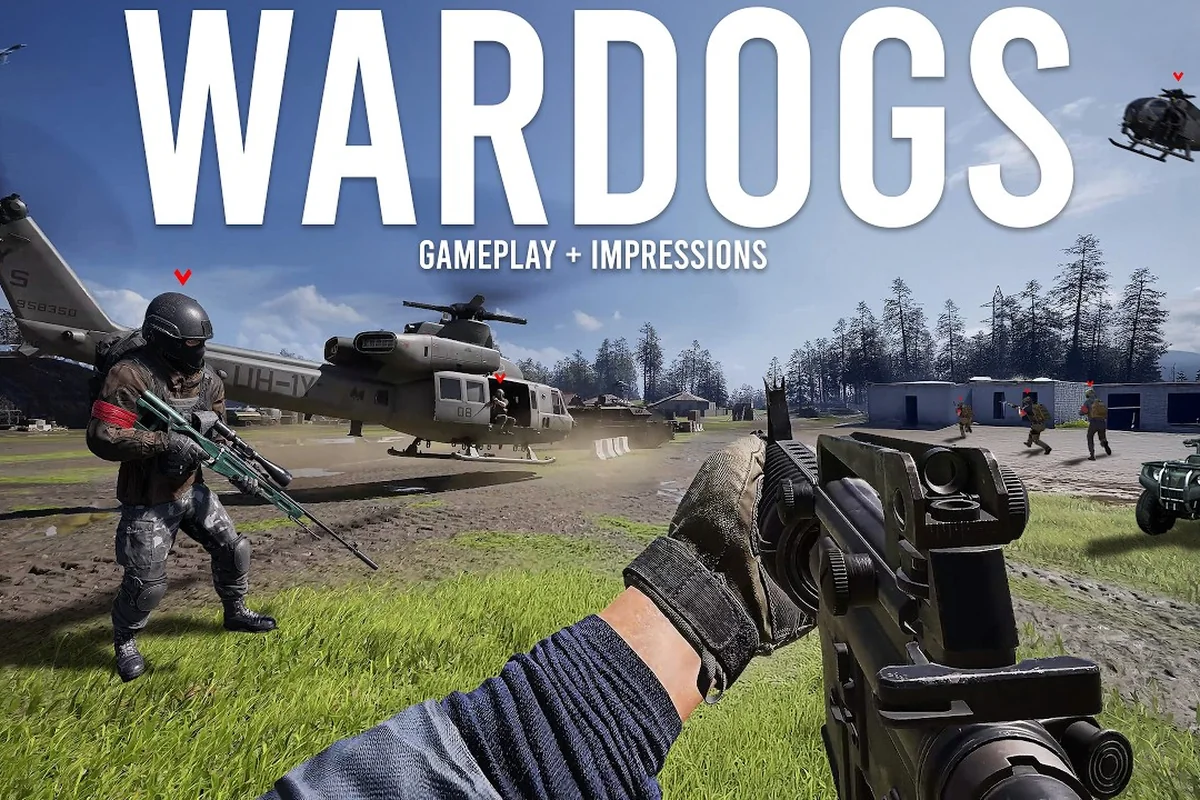
WARDOGS how to choose class is one of the first decisions that shapes your entire experience in this 100-player sandbox shooter. Unlike traditional FPS titles that lock you into a rigid archetype, WARDOGS lets you purchase a fresh loadout every life with the $10,000 starting balance, which means your "class" is really a reflection of how you spend that cash. Understanding this system matters because the right role choice directly impacts both your personal earnings and your team's ability to hold objectives, and getting it wrong can leave you frustrated and broke by match end. The good news is that WARDOGS rewards experimentation, so you can pivot your playstyle between lives without any permanent commitment.
The official class framework referenced by BULKHEAD includes Infantry, Medic, Pilot, Builder, and Engineer, though the game's "play your way" philosophy means these are starting points rather than restrictions. According to the official WARDOGS Steam page, every decision you make affects your account balance, and teamplay actions like reviving squadmates earn cash that persists across matches. That persistence is the key to understanding WARDOGS how to choose class: your role isn't just about combat preference, it's about building a sustainable economy that funds better loadouts over time.
Why the WARDOGS Class System Is Fluid and Loadout-Driven
Before you can answer "WARDOGS how to choose class" for yourself, you need to understand that the game's class system is fluid rather than fixed. Each life, you spend from your persistent cash pool to buy weapons, gear, utility items, and vehicles, and that purchase list effectively defines your role for that life. The five official classes — Infantry, Medic, Pilot, Builder, and Engineer — serve as archetypes that guide your spending, but nothing stops you from mixing roles or switching entirely between lives.
The Infantry role is the most straightforward entry point because it focuses on core combat fundamentals: assault rifles, SMGs, grenades, and armor. This is the WARDOGS best role for players who want to learn the game's movement, gunplay, and objective flow without juggling complex support responsibilities. Infantry players earn cash primarily through kills and objective captures, which means their income scales with their mechanical skill. For a deeper breakdown of the combat-focused path, the WARDOGS class guide covers all five archetypes in detail.
The Medic role deserves special attention because it's the most reliable earner in the game's economy. Every revive you perform grants cash, and because revives are always needed during intense zone fights, medics rarely struggle to fund their next loadout. The Pilot role operates vehicles, primarily helicopters, to ferry teammates and supplies across the 2x2km map. The Builder focuses on fortifying chokepoints with sandbags and structures, while the Engineer handles repairs and demolition. Each role feeds into the team's overall success differently, which is why WARDOGS how to choose class should start with an honest assessment of your strengths and preferences.
Evaluating your playstyle against the WARDOGS best role options
Now that you understand the framework, the real question becomes: which role fits how you naturally play shooters? The table below breaks down the five official classes by their core activities, income sources, and skill requirements, giving you a quick reference for WARDOGS how to choose class decisions.
| Role | Core Activities | Primary Income Source | Skill Requirement |
|---|---|---|---|
| Infantry | Direct combat, objective pushes | Kills, zone captures | Aim and positioning |
| Medic | Reviving, healing teammates | Revive cash, teamplay bonuses | Situational awareness |
| Pilot | Helicopter transport, supply drops | Transport cash, assists | Vehicle control |
| Builder | Fortification construction | Objective defense bonuses | Map knowledge |
| Engineer | Vehicle repair, demolition | Repair cash, structure kills | Technical timing |
If you're an aggressive player who thrives in direct firefights, Infantry is likely your WARDOGS best role because it puts you exactly where the action happens. You'll be the one pushing into the Hot Zone, contesting capture points, and trading fire with enemy squads. The tradeoff is that your income depends entirely on your combat performance, so a bad streak can leave you with a thin wallet. Players who enjoy supporting others from the front lines should consider the Medic role, which keeps you in the action while rewarding you for keeping teammates alive.
For players who prefer a broader view of the battlefield, the Pilot and Builder roles offer strategic depth that pure combat roles lack. Pilots control the map's vertical dimension, dropping teammates into advantageous positions and resupplying forward positions. Builders shape the terrain itself, creating defensive lines that can hold off numerically superior forces. The Engineer role sits between these extremes, keeping vehicles operational and destroying enemy fortifications. If you're still uncertain about WARDOGS how to choose class, try each role for a few lives and track which one feels most natural — the game's flexible economy makes this experimentation essentially free.
Mastering the WARDOGS support class: revive and healing fundamentals
Medic Revive Cash Flow: The Selfish Teamwork Engine
The Medic's revive action isn't altruism—it's the fastest cash-generation loop in WARDOGS. Each squadmate revival pays out immediately, and performing this inside a Hot Zone doubles the reward, turning a standard rescue into a high-yield transaction. This "selfish teamwork" mechanic means a Medic camping near an active objective can bank more per minute than an Infantry player securing kills. Prioritize revives in Hot Zones over safe-area rescues; the doubled payout justifies the tactical risk, accelerating your progression toward better medical gear.
Builder Fortification: The Forward Operating Base Investment
The Builder's forward operating base (FOB) is a high-risk, high-reward cash sink. Fortifying a chokepoint costs significant upfront cash for materials, but the FOB becomes a force multiplier, controlling map flow and funneling enemy Infantry into kill zones. Unlike the Medic's immediate revive income, the Builder's profit is strategic—a well-placed FOB can secure a Hot Zone for your team, indirectly generating cash through teammates' successful objective captures. However, a poorly positioned FOB is a total loss. Analyze the map's chokepoints before committing your resources; a defensible position pays dividends, a vulnerable one bankrupts your match.
The support class in WARDOGS is arguably the most impactful role for team success, and it's also the most misunderstood by new players. Many assume that support means standing in the back and watching, but effective medics are constantly moving between downed teammates, assessing threats, and positioning themselves to maximize their revive range. The revive mechanic is the core of this role: when a teammate falls, you can bring them back to full combat readiness, and the game rewards you with cash for every successful revival.
Understanding WARDOGS how to revive effectively requires more than just running at downed teammates. You need to check your surroundings before committing to a revive, because a medic who dies while reviving helps no one. The best medics use smoke grenades to obscure enemy sightlines, coordinate with nearby infantry for cover fire, and prioritize revives based on who's most critical to the current fight. The WARDOGS healing guide principles apply here: heal aggressively during pushes, but fall back to safe positions when the enemy has clear sightlines on your position.
The table below outlines the key differences between reactive and proactive support play, which directly influences your WARDOGS how to choose class decision if you're leaning toward the medic path.
| Playstyle | Approach | Best Situations | Income Potential |
|---|---|---|---|
| Reactive Medic | Respond to downed teammates | Defensive holds, retreats | Moderate, steady |
| Proactive Medic | Push with frontline, pre-heal | Offensive captures | High, variable |
| Hybrid Medic | Balance both based on flow | Dynamic zone fights | Highest overall |
The revive guide essentials come down to positioning and timing. Always keep cover between you and the enemy when moving to a downed teammate, and use the environment to break sightlines during the revive animation. According to community reports, medics who consistently revive teammates earn significantly more cash than those who focus purely on combat, which makes the support class one of the best economic choices in the game. The cash for teamplay guide explains exactly how revive income compounds across a match.
Building your loadout around your chosen WARDOGS role
The $10,000 Starting Economy and Your First Loadout Decision
Your opening $10,000 dictates your class viability before the first engagement. Spending $8,000 on a top-tier rifle leaves only $2,000 for armor and utility, crippling a Builder who needs fortification materials. Conversely, a Medic can field a complete kit—SMG, medkits, and armor—for roughly $6,500, retaining a cash buffer for respawn costs. Since cash persists across matches, a frugal first life compounds into a $15,000+ bankroll by match three, enabling the expensive Pilot role's helicopter purchase without grinding.
Pilot Economics: Helicopter Cost vs. Transport Payout
Committing to the Pilot class requires understanding the vehicle's cost-to-income ratio. A supply helicopter is a major investment, but ferrying squadmates to objectives generates transport cash per passenger. A full flight of four soldiers pays a meaningful sum, and doing so into a Hot Zone doubles the fare. Compare this to the Engineer's artillery tank, which has high damage potential but zero teamplay income. If your squad lacks coordination, the Pilot's transport payouts offer a steadier, more reliable cash stream than the Engineer's combat-dependent earnings.
Once you've settled on your role, the next step in WARDOGS how to choose class is building a loadout that amplifies your strengths. Your $10,000 starting balance gives you room to experiment, but smart spending ensures you have enough cash left for future lives. The key is to match your purchases to your role's demands rather than buying the most expensive gear you can afford.
For Infantry players, the priority is a reliable primary weapon, armor, and grenades. You want gear that performs well in your preferred engagement range, whether that's close-quarters SMG play or mid-range assault rifle combat. The best loadout weapons guide breaks down which weapons offer the best value for their price point. Medic players should prioritize medkits, smoke grenades, and a secondary weapon that can hold its own in close encounters — you're not looking to win long-range duels, you're looking to survive long enough to revive your squad.
Pilot players need to budget for vehicle costs, which means their loadout should be lean on personal gear. A basic sidearm and some utility items are usually enough, since most of your time will be spent in the cockpit. Builder and Engineer players should invest in their respective tools — construction materials for builders, repair kits and explosives for engineers — while keeping a serviceable weapon for self-defense. The table below shows recommended budget allocations for each role.
| Role | Weapon Budget | Gear Budget | Vehicle/Tool Budget | Reserve |
|---|---|---|---|---|
| Infantry | $4,000-5,000 | $2,000-3,000 | $0-1,000 | $1,000-2,000 |
| Medic | $2,000-3,000 | $3,000-4,000 | $0-500 | $2,000-3,000 |
| Pilot | $1,000-2,000 | $1,000-2,000 | $5,000-7,000 | $1,000 |
| Builder | $2,000-3,000 | $2,000-3,000 | $2,000-3,000 | $2,000 |
| Engineer | $2,000-3,000 | $2,000-3,000 | $2,000-3,000 | $2,000 |
The WARDOGS best role for your loadout depends on how much you enjoy managing resources versus pure combat. If you find yourself constantly broke and unable to afford good gear, consider switching to a support role that generates steadier income. If you're sitting on a large cash reserve but feel like you're not impacting matches, a more aggressive role might suit you better. The game's persistent economy means your choices compound over time, so finding a role that keeps you both effective and solvent is the real key to long-term success.
Advanced role strategy: adapting your class to match flow
The final piece of WARDOGS how to choose class is learning to adapt your role as the match evolves. A role that works perfectly in the opening minutes might become less effective as the Hot Zone shifts and the battlefield changes. The best players treat their class selection as a dynamic decision, reevaluating their loadout each life based on the current situation.
Early in a match, Infantry and Pilot roles excel because they can secure map control and establish forward positions quickly. As the match progresses and teams consolidate around objectives, Medic and Builder roles become increasingly valuable, since sustained fights create constant revive opportunities and defensive structures that hold off enemy pushes. The Engineer role shines when vehicles start dominating the battlefield, as keeping your team's armor operational while destroying the enemy's becomes the highest-impact activity.
The sniper class deserves special mention here, because while it's not one of the five official roles, it's a popular playstyle that many players gravitate toward. The WARDOGS sniper class guide covers this path in depth, including ghillie suit loadouts and sightline control. Snipers trade frontline presence for long-range dominance, which can be incredibly effective on open maps but leaves your team short-handed in close-quarters zone fights. If you're considering this playstyle, make sure you're contributing to objective control rather than just farming kills from a distance.
The Hot Zone mechanic adds another layer to role selection because it pays double cash for actions taken within its boundaries. This means medics who revive inside the Hot Zone earn double revive cash, and infantry who capture the zone earn double objective bonuses. When the Hot Zone is active, consider shifting your role toward whatever action you can perform inside it — even a pilot can earn transport cash by dropping teammates directly into the zone. This dynamic approach to WARDOGS how to choose class keeps the game fresh and ensures your role always aligns with the current match conditions.
Frequently Asked Questions
What is the WARDOGS best role for beginners?
The Infantry role is the best starting point because it focuses on core combat skills without requiring specialized knowledge. You'll learn map layouts, engagement ranges, and objective flow while earning cash through kills and captures. Once you're comfortable with the fundamentals, experiment with support roles to expand your impact.
How do I revive teammates in WARDOGS?
Approach a downed teammate and interact with them to start the revive animation. Check your surroundings first, because you're vulnerable during the revive. Using smoke grenades to block enemy sightlines significantly improves your survival odds. Each successful revive earns you cash, making this the most reliable income source for the support class.
Does the WARDOGS healing guide apply to all classes?
The healing fundamentals apply primarily to the Medic role, but every class benefits from understanding revive mechanics. Even as Infantry, you can revive teammates in emergencies, and the cash reward makes it worth attempting when safe. The key is knowing when to commit to a revive versus continuing to fight, which comes with experience.
Can I switch classes between lives in WARDOGS?
Yes, WARDOGS has no permanent class lock. Each life, you spend your persistent cash on a new loadout, which effectively changes your role. This flexibility means you can adapt to match conditions, try different playstyles, and find the role that works best for you without any long-term commitment.
How does the support class earn cash compared to combat roles?
The support class earns cash primarily through revives, which are consistently available during objective fights. Combat roles depend on kills, which are less reliable. According to community data, medics often out-earn infantry players because revive opportunities are more frequent than kill opportunities, making support a strong economic choice.