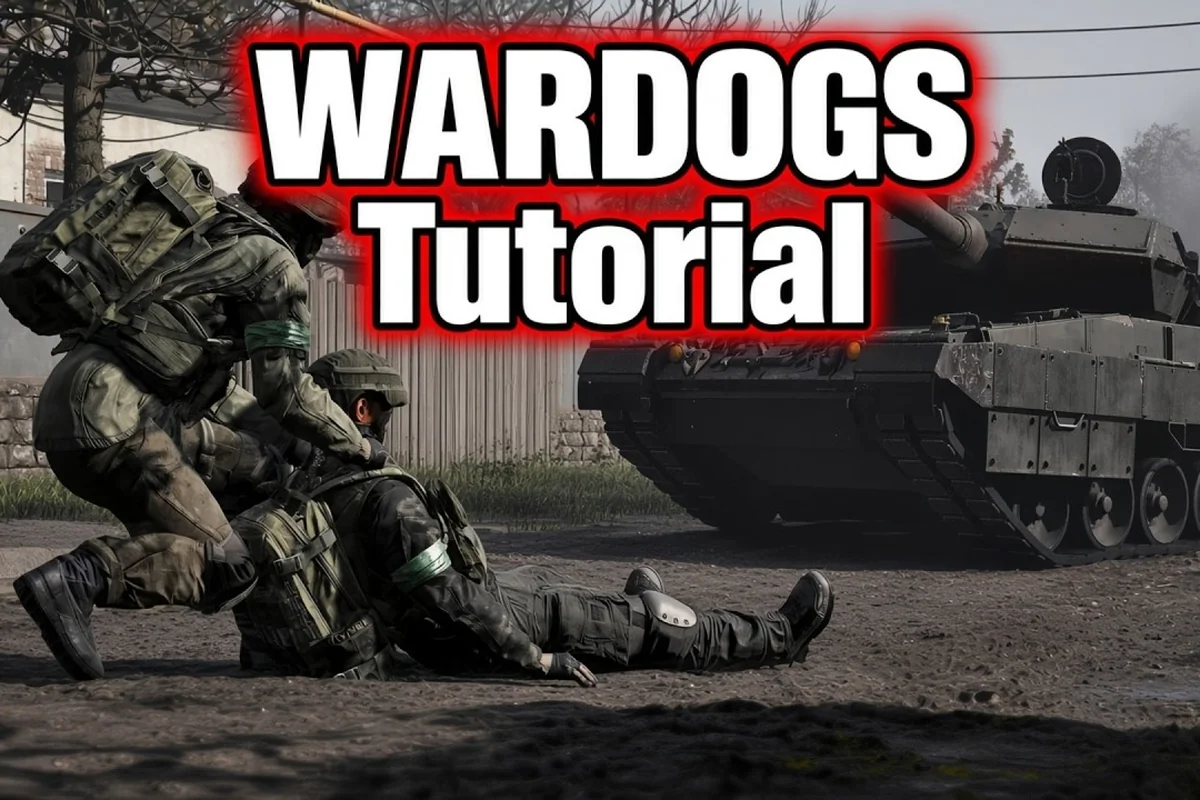
Dropping into your first WARDOGS match can feel overwhelming when 100 players are fighting across a massive map, but this WARDOGS beginner guide breaks down the core mechanics so you can contribute from your very first life. The game's persistent economy means every decision you make carries weight beyond a single match, which is why understanding the fundamentals before you deploy matters more than raw aim. By the time you finish reading, you will know exactly how to earn cash, build a loadout, and play the objective like a veteran.
Understanding the WARDOGS Economy and Loadout System
The single most important concept for any WARDOGS new player guide is the persistent cash system that defines how the game plays. According to the official WARDOGS Steam page, every player starts with $10,000 and purchases a custom loadout each life from a wide selection of weapons, gear, utility, and vehicles. Unlike traditional round-based shooters where you lose everything after death, your cash persists across matches, which creates a long-term progression loop that rewards smart spending.
This economy fundamentally changes how you approach every engagement because dying doesn't reset your progress entirely. Instead, you only lose the cost of the loadout you bought for that life, so a cautious player can build wealth over time while aggressive players cycle through cheaper kits. The game rewards teamplay actions such as reviving squadmates, transporting teammates, and controlling objectives with additional cash, which means even less mechanically skilled players can grow their bankroll by playing support roles.
How to Spend Your Starting $10,000
Your first purchase sets the tone for your early matches, so you should prioritize versatility over specialization. A balanced starter loadout typically includes a mid-range rifle, a sidearm, basic armor, and a medical syringe, leaving you with enough reserve cash to rebuy after an unfortunate death.
| Loadout Type | Primary Weapon | Cost Range | Best For |
|---|---|---|---|
| Budget Recon | Marksman rifle + pistol | $2,500–$3,500 | Learning map layouts and spotting |
| Aggressive Rush | SMG + shotgun secondary | $3,000–$4,000 | Close-quarters fights and objective pushes |
| Support Focus | LMG + ammo box + medkit | $4,000–$5,000 | Holding chokepoints and reviving teammates |
| Vehicle Start | Cheap rifle + light vehicle | $5,000–$6,000 | Fast map traversal and supply runs |
The Hot Zone mechanic pays double cash for capturing and holding dynamic objective zones, so spending a little extra on a loadout that lets you contest those areas pays dividends quickly. Community reports suggest that players who focus on Hot Zone captures during their first few hours accumulate cash significantly faster than those who roam randomly.
Earning Cash Through Teamplay
Since cash persists across matches, building a reliable income stream is your top priority as a beginner. Reviving a downed squadmate earns you a solid payout, and transporting teammates to objectives in a vehicle generates steady income while also helping your team maintain map control. The game's design encourages what PCGamesN calls "selfish teamwork," where helping your teammates directly profits you, creating a positive feedback loop that benefits everyone.
Mastering Movement and Combat Fundamentals
Once you understand the economy, the next step in WARDOGS getting started is learning how to move and fight effectively. The game features proximity voice chat that lets you communicate with nearby players, which is essential for coordinating pushes and calling out enemy positions. Movement feels weighty compared to arcade shooters, so you need to account for momentum when rounding corners or peeking sightlines.
The sprint-to-aim transition takes roughly half a second, which means you should pre-aim corners before committing to a push. Jumping while shooting reduces accuracy significantly, so keep your feet planted when engaging at medium range. Crouching tightens your spread and makes you a smaller target, but it also slows your movement speed, creating a tradeoff you must manage based on the engagement distance.
Weapon Handling and Recoil Patterns
Every weapon class in WARDOGS has distinct recoil patterns that you need to learn through practice. The AK-style rifles pull upward and to the right, while SMGs have tighter vertical recoil but suffer from damage falloff at range. Shotguns excel in buildings and tight corridors but become useless beyond 15 meters, so you must choose your fights based on your loadout's strengths.
| Weapon Class | Effective Range | Recoil Pattern | Time to Kill | Best Map Areas |
|---|---|---|---|---|
| Assault Rifles | 25–60 meters | Vertical with slight drift | 0.4–0.6 seconds | Open fields and rooftops |
| SMGs | 5–25 meters | Tight vertical | 0.3–0.5 seconds | Buildings and trenches |
| Sniper Rifles | 60–150+ meters | Minimal but punishing | 0.1 seconds (headshot) | Elevated positions |
| LMGs | 20–80 meters | Heavy horizontal sway | 0.5–0.7 seconds | Chokepoints and defensive lines |
The ghillie suit mentioned on the official Team17 page lets you blend into foliage for sniper play, which is a strong option once you understand map sightlines. However, for your first few matches, stick with assault rifles or SMGs because they forgive positioning mistakes better than precision weapons.
Movement Techniques for Survival
Learning to move between cover effectively will keep you alive far longer than raw aim. The game's slide mechanic lets you break line of sight quickly when crossing open ground, and you can chain it into a sprint to maintain momentum. When you hear enemy footsteps through the audio system, stop moving and listen for the direction before committing to a fight.
Vehicles serve as both transportation and mobile cover, but they also make you a visible target on the map. The official WARDOGS website emphasizes that you can ferry supplies to teammates by helicopter or man an artillery tank, so don't overlook vehicle play as a beginner. Even a simple jeep lets you reposition your squad quickly and earn transport cash while doing it.
Playing Objectives and Understanding Match Flow
A WARDOGS how to play guide wouldn't be complete without explaining the objective system that drives every match. The game features 100-player three-team matches where dynamic objective zones appear on the map and shift over time. You earn points for your team by capturing and holding these zones, with the Hot Zone paying double cash for the team that controls it.
The three-team structure creates constantly shifting alliances because the two losing teams often target the leader, which means you need to read the battlefield state before committing to a fight. If your team is winning, expect coordinated attacks from both other teams; if you're losing, look for opportunities to third-party fights between the other two factions.
Prioritizing Objectives Based on Match State
Your objective priority should shift based on the score and time remaining, and understanding this flow separates useful teammates from liabilities. Early in the match, focus on capturing neutral zones to build a point lead, while mid-match you should defend your captured zones and contest the Hot Zone. Late in the match, every capture matters, so stick with your squad and avoid solo pushes that feed the enemy team points.
| Match Phase | Primary Objective | Secondary Focus | Risk Tolerance |
|---|---|---|---|
| Early (0–10 min) | Capture neutral zones | Build cash reserves | Medium — deaths are cheap |
| Mid (10–20 min) | Hold captured zones | Contest Hot Zone | Low — preserve your loadout |
| Late (20–30 min) | Defend lead or catch up | Deny enemy captures | High — every life matters |
The dynamic objective zones shift unpredictably, so you must constantly check your map to see where the next capture point will appear. Players who position themselves between current and next objectives gain a significant advantage because they can rotate faster than enemies reacting to the change.
Squad Play and Communication
Squadding up with friends or using the in-game squad finder dramatically improves your effectiveness because coordinated pushes beat solo plays almost every time. The proximity voice chat lets you talk to nearby teammates even without a formal squad, so call out enemy positions and coordinate attacks when you're in the same area. If you want a deeper breakdown of communication systems, the matchmaking guide covers squad mechanics in detail.
Building an Effective Early-Game Strategy
Now that you understand the mechanics, let's put together a practical WARDOGS starter guide strategy that works in your first few matches. The key insight is that cash preservation matters more than kill count, because a player with $15,000 in the bank can buy a top-tier loadout every life while a player with $2,000 struggles to afford basic gear.
Your early matches should focus on learning the map layout, identifying high-traffic areas, and understanding where the Hot Zone tends to spawn. According to community data, most maps have predictable Hot Zone rotations that favor certain regions, so learning these patterns gives you a significant income advantage.
Recommended First-Match Loadout and Approach
For your absolute first match, buy a budget loadout and focus on survival rather than aggressive play. Stick with your squad, engage only when you have numerical advantage, and prioritize reviving teammates over chasing kills. This approach builds your cash reserves while you learn the game's flow.
-
Primary weapon: Mid-tier assault rifle with a red dot sight
-
Secondary: Reliable pistol for close-range emergencies
-
Utility: One medical syringe and one grenade
-
Armor: Basic vest that reduces damage by 15%
-
Total cost: Approximately $3,200, leaving you $6,800 in reserve
After your first few deaths, you'll start recognizing engagement patterns and can adjust your loadout accordingly. If you keep dying to snipers, invest in smoke grenades to obscure sightlines; if you're losing close-range fights, switch to an SMG and play buildings.
Common Beginner Mistakes to Avoid
Every WARDOGS new player guide should warn against the most common pitfalls that drain your cash and frustrate your team. The biggest mistake is buying the most expensive loadout every life, which leaves you broke after two deaths and forces you into budget gear for the rest of the session. Instead, scale your spending based on your current cash reserves.
Another frequent error is ignoring the objective entirely to chase kills, which hurts your team's score and earns you less cash than playing the objective. The game's economy explicitly rewards objective play, so you're actively hurting your income by treating it like a deathmatch. Finally, don't wander alone across open ground, because three-team matches mean you can get caught between two enemy squads with no escape route.
Advanced Tips to Accelerate Your Learning Curve
Once you've survived your first few matches, these advanced tips will help you master WARDOGS faster than the average player. The hot zone rotation patterns are the single most valuable piece of map knowledge you can acquire, because they let you pre-position for the next capture before it spawns.
Building a forward operating base at a chokepoint, as mentioned on the official Team17 page, creates a defensive anchor that lets your team control a region of the map. While this requires coordination, even a simple sandbag wall and ammo box can turn a losing fight into a winning defense. If you want to understand match rules and scoring better, the how to win a match guide breaks down the point system in detail.
Reading the Battlefield and Rotating Effectively
The best players constantly scan the map to understand where fights are happening and where they're likely to happen next. When you see two teams fighting over a zone, resist the urge to charge in immediately; instead, wait for one side to win and then engage the weakened survivors. This third-party strategy is particularly effective in three-team matches because the winning squad often has wounded players and depleted resources.
| Skill to Develop | How to Practice | Expected Timeframe |
|---|---|---|
| Map Awareness | Check map every 10 seconds | 3–5 matches |
| Recoil Control | Practice at firing range | 30 minutes |
| Hot Zone Prediction | Track zone spawn patterns | 5–10 matches |
| Squad Coordination | Use voice chat actively | Immediate |
Managing Your Cash for Long-Term Success
The persistent economy means your bankroll management determines your long-term success more than any single mechanical skill. A good rule of thumb is to never spend more than 50% of your current cash on a single loadout, which ensures you always have enough for at least two deaths. As your cash grows, you can afford specialized loadouts for different situations, but early on, versatility wins.
Players who consistently maintain a $10,000+ reserve can pivot to any playstyle mid-match, which is a massive advantage when the Hot Zone shifts to a vehicle-heavy area or a close-quarters building complex. The game's design rewards flexibility, so don't lock yourself into one loadout type.
Frequently Asked Questions
What is the best starting loadout in WARDOGS?
A budget assault rifle loadout with basic armor and one medkit is the best starting point because it handles most situations without draining your cash reserves. This setup costs around $3,200, leaving you $6,800 for future purchases. Focus on learning map layouts and objective rotations before upgrading to more expensive gear.
How does the persistent economy work in WARDOGS?
Your cash carries over between matches, so you build wealth over time rather than starting fresh each round. You earn money through kills, objective captures, revives, and transport actions, with the Hot Zone paying double. Death only costs you the loadout you purchased, not your total bankroll, which rewards careful spending.
How long does it take to learn WARDOGS?
Most players feel comfortable with the core mechanics after 3–5 matches, which is roughly 2–3 hours of playtime. Mastering map rotations and Hot Zone patterns takes longer, usually 10–15 matches. The game's three-team structure adds strategic depth that continues to reveal itself as you gain experience.
Is WARDOGS playable solo or do I need a squad?
You can absolutely play solo, especially since proximity voice chat lets you coordinate with nearby teammates without a formal squad. However, squadding up with friends or using the in-game squad finder improves your effectiveness significantly. The game's economy rewards teamplay actions, so even solo players should prioritize helping nearby teammates.
What is the Hot Zone and why does it matter?
The Hot Zone is a dynamic objective area that pays double cash for captures and holds, making it the most contested spot on the map. Prioritize it because that cash advantage compounds across a full match, funding better loadouts for the late game.