
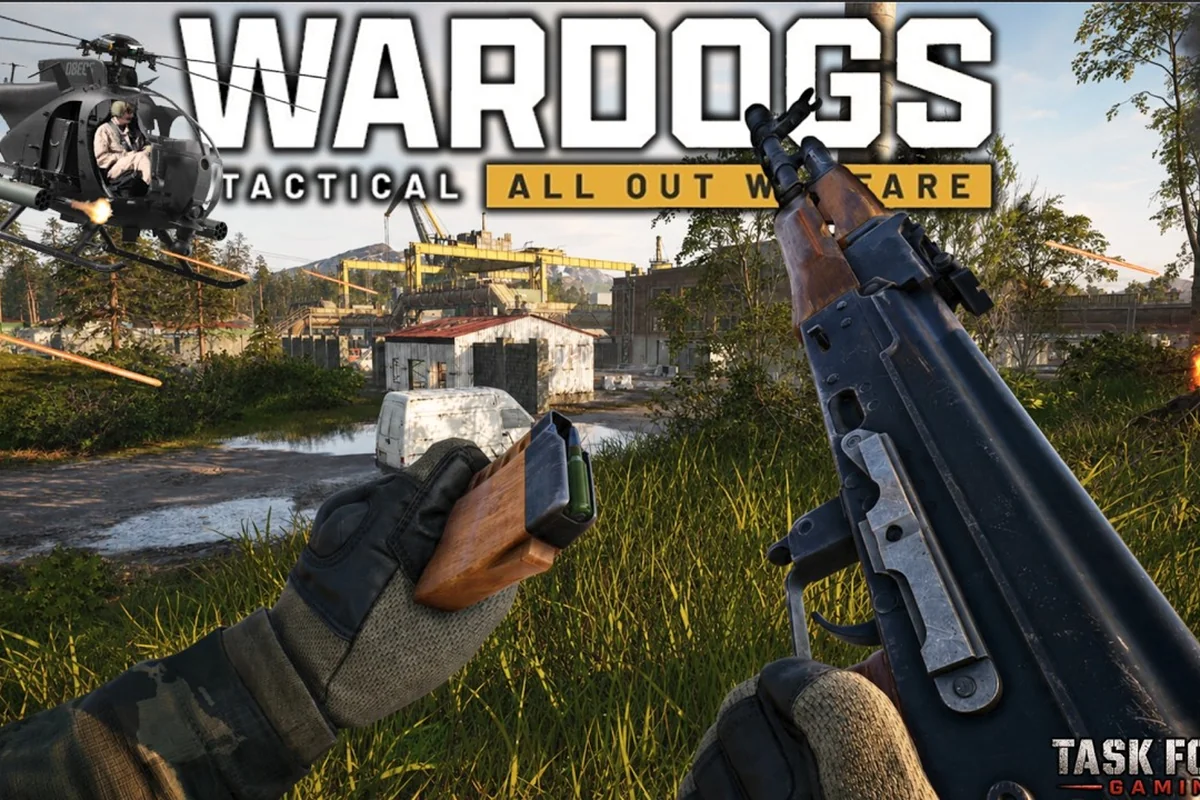
WARDOGS 100 player mode drops you into a tactical all-out warfare FPS where one hundred players split across three teams fight over a single control zone. This isn't another Battle Royale and it isn't another Extraction Shooter — it's a King of the Hill inspired format where the first team to hit 100 points takes the match. Understanding how the WARDOGS 100 player mode works matters because it completely reshapes how you approach positioning, team coordination, and when to push or hold.
The format rewards map awareness over raw aim because the control zone moves after each capture, and your squad's ability to read the randomized zone location determines whether you dominate or spend the match playing catch-up. While the core loop sounds simple, the three-team dynamic creates shifting alliances, constant flank pressure, and a scoring rhythm that punishes passive play. Get the latest breakdown of the match rules, scoring system, and what the developers have planned for future modes below.
Core Rules of the WARDOGS 100 Player Mode
The 100-Point Victory Threshold: Why It Favors Aggression
The first team to 100 points wins, but the scoring rate is directly tied to player count inside the zone. If your team holds a 20-player majority inside the 2x2km Control Zone, you accrue points faster than a team holding a slim 1-2 player advantage. This creates a critical strategic inflection: a team camped at the zone's edge with 15 players earns points slower than a fully committed squad of 25, even if the campers survive longer. The math forces aggression—passive play near the boundary mathematically extends match length and invites third-party flanks from the third team.
All-Out Warfare vs. Battle Royale: The Respawn Economy Difference
Unlike Battle Royale's single-life elimination, WARDOGS' All-Out Warfare mode sustains a constant 100-player population through respawns, meaning the Control Zone fight never thins out as a match progresses. This changes weapon and utility priorities: sustained-fire weapons and ammunition management matter more than burst damage, since you cannot "win" by eliminating a squad permanently. The King of the Hill scoring model—points for zone presence rather than kills—means a team with a 40% lower kill count can still win by maintaining a consistent 30-player zone occupancy over the match's duration.
The WARDOGS 100 player mode runs on a simple but brutal scoring loop: three teams of roughly 33 players each drop onto a massive 256km² map, but only a small 2x2km Control Zone matters at any given moment. The team with the most players inside that zone earns points over time, and the first team to reach 100 points wins the match. According to the official WARDOGS Steam page, the entire match is designed around this King of the Hill inspired structure rather than a traditional elimination format.
Because the zone location is randomized at the start of each match, you can't rely on memorized routes or pre-planned defensive positions. The randomized zone location forces every squad to adapt its approach mid-match, which means recon and map awareness become just as important as gunplay. This design choice directly addresses a common complaint in similar FPS titles: matches feeling stale because players grind the same chokepoints every round.
The scoring system rewards presence over kills, although eliminations still matter because they clear the zone of enemy players. A team that holds the zone with a numerical advantage generates points consistently, while a team that wins fights but fails to push into the zone watches its score stagnate. This creates a natural tension between aggressive hunting and disciplined objective play, and the best squads learn to balance both.
| Match Element | Value | Strategic Impact |
|---|---|---|
| Player Count | 100 total (3 teams) | Constant pressure from two separate enemy factions |
| Map Size | 256km² | Long-range engagements and vehicle play potential |
| Control Zone | 2x2km randomized | Forces adaptability and recon priority |
| Win Condition | First to 100 points | Rewards sustained zone presence over kill counts |
| Team Structure | 3 factions | Creates shifting rivalries and flank opportunities |
The three-team structure deserves special attention because it changes how you evaluate every fight. In a standard two-team mode, every enemy is hostile and every engagement is binary. In the WARDOGS 100 player mode, you must track two separate enemy teams, their current positions, and which one poses the greater threat to your zone control. Smart squads sometimes let two opposing teams fight each other while they slip into the zone uncontested.
Scoring System and Match Flow
The WARDOGS scoring system rewards consistent zone control rather than burst performance, which means the match flow has distinct phases depending on how close each team is to the 100 point threshold. Early in the match, teams spread out to secure good approach angles and gather intel on the zone location. Mid-match, the fighting intensifies as the zone rotates and teams jockey for favorable positions. Late in the match, the leading team plays defensively while the trailing teams form temporary alliances to dethrone the leader.
According to the Team17 official game page, the team with the most players inside the control zone earns points, which means the scoring system directly rewards player density inside the objective area. This mechanic creates a fascinating tension: stacking your entire team inside the zone maximizes points but makes you vulnerable to area-of-effect weapons and coordinated pushes from both enemy teams. Spreading out reduces vulnerability but slows your scoring rate.
The 2x2km control zone rotates after each capture phase, and the randomized location means no two matches play the same. This variability extends match variety considerably, because teams cannot rely on fixed defensive setups or predictable engagement points. Instead, each match requires fresh recon, new approach routes, and constant communication about enemy movements across the massive map.
| Scoring Phase | Typical Duration | Key Objective |
|---|---|---|
| Early Match | First 5-8 minutes | Secure zone presence and establish map control |
| Mid Match | Minutes 8-15 | Rotate efficiently and break enemy holds |
| Late Match | Final 5 minutes | Protect the lead or force a comeback |
| Overtime | As needed | Contest the zone until a team reaches 100 |
The match length depends heavily on how contested the zone becomes, because a dominant team can close out a match quickly while evenly matched teams stretch the timer. Community reports suggest most matches run between 15 and 25 minutes, although close games can extend longer when the lead changes hands repeatedly. If you want a deeper breakdown of how the timer and respawn mechanics interact, check our WARDOGS scoring system guide which covers the full points calculation and match timer rules.
Three Team Mode Dynamics and Strategy
The WARDOGS three team mode creates a unique strategic landscape that veterans of traditional two-team FPS games must actively unlearn. Because two separate enemy factions exist, you can never fully commit to a fight without considering what the third team is doing. This three-team dynamic produces emergent gameplay moments where temporary truces form, flanks open up unexpectedly, and the balance of power shifts several times over the course of a single match.
Positioning becomes more complex because you must track threats from two directions simultaneously. A squad that holds the zone must defend against coordinated pushes from both enemy teams, while a squad approaching the zone must decide which team to engage first and which to avoid. The randomized zone location compounds this complexity because you can't pre-plan defensive positions; every match requires fresh tactical decisions about approach angles and sight lines.
| Strategic Situation | Two-Team Response | Three-Team Response |
|---|---|---|
| Enemy holds the zone | Direct assault | Assess both teams, pick the weaker flank |
| You hold the zone | Defend one front | Split attention between two attack vectors |
| Trailing in points | Aggressive push | Consider temporary alliance with the third team |
| Leading in points | Hold position | Play defensively but monitor both enemy teams |
The most successful squads in the WARDOGS three team mode treat the match as a constant information war rather than a pure shooting gallery. They use scouts to track both enemy teams, they communicate zone rotations immediately, and they time their pushes to exploit moments when the two opposing teams clash. This intelligence-driven approach consistently outperforms teams that simply rush the zone and hope for the best.
The scoring system amplifies this dynamic because the leading team becomes a natural target for both trailing teams. When one team approaches the 100 point threshold, the other two often coordinate an unofficial ceasefire to focus on the leader. Understanding this behavioral pattern helps you anticipate enemy movements and plan your own strategy around the current scoreboard state. For a complete walkthrough of match-winning tactics, the how to win a match guide breaks down the essential decision points.
Match Types and Future Modes
The WARDOGS 100 player mode currently serves as the primary match type, but the developers have signaled that the match types roster will expand over time. The Steam news section reports that full release plans include objective variations and a seasonal meta game, which suggests the core three-team format will evolve with new ways to play. This commitment to mode variety keeps the game fresh and gives players a reason to return between seasons.
The development team spent years collaborating directly with the original ARMA mod creators to build a standalone King of the Hill inspired FPS, and that pedigree shows in the attention to detail. The seasonal meta game mentioned in the Steam news updates could introduce progression systems, cosmetic rewards, or competitive rankings that give the 100 player format additional stakes beyond individual match wins.
| Potential Future Mode | Likely Focus | Community Speculation |
|---|---|---|
| Objective Variations | New win conditions | Capture-the-flag style or escort missions |
| Seasonal Events | Limited-time twists | Modified zone rules or special modifiers |
| Competitive Queue | Ranked play | Leaderboards and seasonal rewards |
| Smaller Team Variants | Reduced player count | 6v6 or 9v9 competitive formats |
The future modes discussion frequently appears in community forums, with players speculating about what the developers might add after the full release. Some community members want a smaller competitive format that emphasizes individual skill over the chaos of 100 player battles, while others hope for larger-scale operations that push the player count even higher. The developers have not confirmed any specific additions, but the design team's history with the ARMA mod community suggests they value player feedback when shaping the roadmap.
The current three-team format already offers meaningful variety through the randomized zone location, but adding objective variations would deepen the tactical possibilities considerably. Imagine a version where teams must capture and hold multiple zones simultaneously, or a mode where the zone shrinks over time to force closer engagements. These variations would build on the existing WARDOGS 100 player mode foundation while offering genuinely different strategic challenges. If you want to understand how the current mode fits into the broader game structure, our game modes overview covers the full picture.
Practical Tips for the 100 Player Format
The 2x2km Control Zone vs. the 256km² Map: Understanding the Odds
The randomized Control Zone occupies a mere 2x2km square—just 4km²—within the vast 256km² map, meaning the active combat area represents only about 1.56% of the total playable space. This extreme density ratio fundamentally shapes the 100-player format: with roughly 33 players per team funneled into that small zone, engagement distances shrink dramatically compared to the surrounding terrain. Teams that fail to rotate early when the zone shifts risk being caught in the dead zone, forced to traverse up to 15km of open ground under fire from entrenched defenders.
The Third Team as a Kingmaker: Two-Front Pressure Tactics
In the three-team format, the team in second place faces a unique dilemma: attacking the leader directly leaves their flank exposed to the third-place team. A concrete case: Team A leads 60-40, Team B trails at 35, and Team C sits at 30. If Team B commits 20 players to push Team A's zone presence, Team C can sweep in with a 10-player squad to capture the zone uncontested, flipping the scoring lead. Advanced squads use this by deliberately holding 5 players in reserve as a "spoiler" force, ready to contest whichever team threatens to hit 100 first.
Mastering the WARDOGS 100 player mode requires a combination of mechanical skill, map awareness, and strategic discipline that goes beyond standard FPS fundamentals. The player density scoring mechanic means you must constantly evaluate whether to stack the zone for points or spread out for safety, and the right answer changes based on the current score state and enemy positions. Veterans of the format develop a sixth sense for when to commit and when to rotate.
Communication becomes the single most important factor in determining whether your team succeeds in the WARDOGS 100 player mode. A team that shares information about enemy movements, zone rotations, and scoring opportunities will consistently outperform a team of mechanically gifted players who operate in silence. Designate a shot-caller who makes final decisions about when to push the zone and when to fall back, because hesitation in the three-team format gets you caught between two enemy forces.
-
Track both enemy teams every time you respawn, not just the one closest to your position
-
Time your zone pushes to coincide with clashes between the other two teams
-
Use the randomized zone location as an opportunity to secure favorable sight lines before enemies arrive
-
Adjust your aggression based on the current scoreboard position of all three teams
-
Protect your leading position by monitoring both flanks rather than committing fully to one side
The 2x2km control zone rewards teams that control the space around it as much as the zone itself. Establishing overwatch positions on the perimeter lets you deny enemy approaches while your teammates stack the zone for points. The best squads assign specific roles: dedicated scouts who track enemy movements, a zone presence team that generates points, and a flanking unit that disrupts enemy pushes. This division of labor maximizes the efficiency of your 33-player team.
New players often underestimate the importance of the 100 point win condition when making tactical decisions. A team that leads by 20 points should play conservatively and protect the lead, while a team trailing by 30 points must take calculated risks to close the gap. The scoring system rewards teams that adapt their aggression level to the current score state, and players who treat every match the same way will struggle against opponents who adjust their approach. Beginners can find more foundational advice in the WARDOGS for beginners guide.
Frequently Asked Questions
How does the WARDOGS 100 player mode scoring work?
The team with the most players inside the 2x2km control zone earns points over time. The first team to reach 100 points wins the match. The zone location is randomized each match, and the scoring system rewards sustained presence over individual eliminations, though clearing enemies from the zone remains essential.
What makes the three team mode different from standard FPS modes?
The WARDOGS three team mode creates two separate enemy factions, which means you must track threats from multiple directions simultaneously. This dynamic produces shifting alliances, unexpected flanks, and constant information warfare. The leading team often becomes a target for both trailing teams, creating emergent strategic behavior.
How long does a typical WARDOGS 100 player mode match last?
Most matches run between 15 and 25 minutes according to community reports, though close games can extend longer when the lead changes hands repeatedly. The match length depends on how contested the zone becomes and how quickly teams reach the 100 point threshold.
What future modes are planned for WARDOGS?
The developers have confirmed plans for objective variations and a seasonal meta game, though specific details remain unannounced. Community speculation includes smaller competitive formats, modified zone rules, and special event modes. The design team's history with the ARMA mod community suggests player feedback will shape the roadmap.
Do kills matter in the WARDOGS 100 player mode?
Kills matter because they clear the zone of enemy players and reduce the opposing team's player density inside the objective area. However, the scoring system rewards zone presence over eliminations. A team that wins fights but fails to push into the zone will watch its score stagnate while a zone-holding team generates points consistently.