
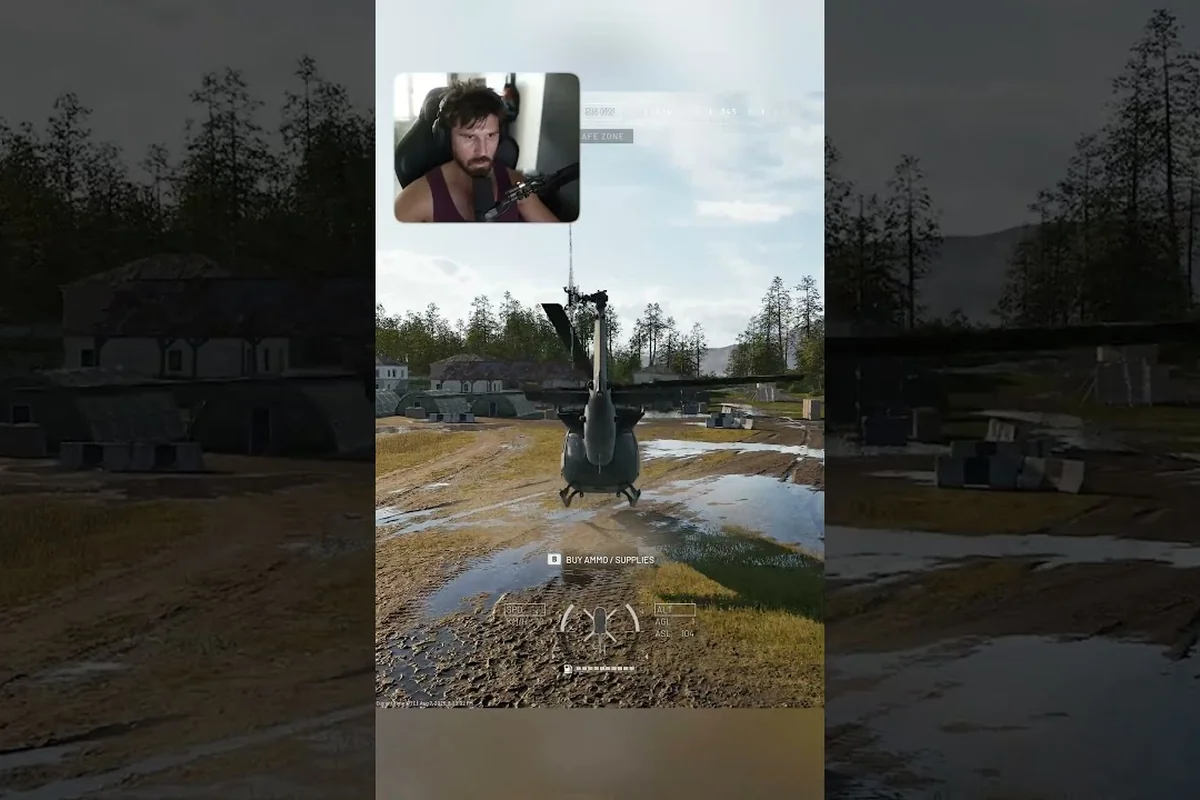
Mastering WARDOGS vehicle warfare is the difference between dominating the 2x2km Control Zone and watching your squad get rolled over by a coordinated push. With 100 players split across three teams fighting for map control, the ability to deploy armored vehicles at the right moment and keep your logistics line running decides who caps points first. This guide breaks down jeep and truck roles, spawn mechanics, costs, and the supply-chain thinking that separates winning teams from chaotic ones.
Vehicle warfare in WARDOGS isn't just about driving fast and shooting — it's an economy game. Every vehicle you spawn is cash pulled from your team's shared pool, and every vehicle you lose is a chunk of that investment burning in the dirt. Understanding vehicle cost structures and vehicle spawn timing lets you stretch every dollar further while denying the enemy the same advantage. Because cash is king in this tactical FPS, the squads that treat vehicles as strategic assets rather than disposable toys consistently outmaneuver their opponents.
Understanding the Vehicle Economy in WARDOGS
The vehicle economy in WARDOGS operates on a simple but punishing principle: every wheel you put on the battlefield is a bet against your team's survival. According to the official WARDOGS Steam page, vehicles are part of the loadout economy purchased with cash — meaning you're not just choosing a ride, you're allocating resources that could otherwise fund weapons, building materials, or reinforcements. This creates a constant tension between immediate firepower and long-term sustainability.
The vehicle cost system rewards teams that think in terms of return on investment. A cheap jeep that ferries two players to a contested point and survives the trip has already paid for itself. A truck that delivers supplies to a forward position while dodging enemy fire is worth ten times its price tag. The problem emerges when players spawn vehicles without a clear purpose, bleeding the team's cash pool dry for zero tactical gain.
| Vehicle Class | Typical Cost Range | Primary Role | Risk Profile |
|---|---|---|---|
| Scout Jeep | Low | Recon, fast flanking, point capture | High mobility, low survivability |
| Supply Truck | Medium | Logistics, ammo/med resupply, fortification | Slow, vulnerable, high value |
| Armored Transport | High | Troop delivery, breakthrough support | Balanced armor, moderate speed |
| Artillery Tank | Very High | Area denial, base destruction, fire support | Extremely slow, massive target |
The vehicle spawn system ties directly into this economy. Spawning happens at designated points on the map, and the cooldown mechanics mean you can't just chain-spawn vehicles endlessly. Community reports suggest that spawn timers scale with vehicle class — heavier vehicles take longer to arrive, which punishes wasteful deployment. This creates a natural rhythm where teams must decide between constant light vehicle pressure or occasional heavy armor pushes.
Because the map spans 256km² with a randomised 2x2km Control Zone, vehicle spawn locations become strategic chokepoints. Teams that control the area around spawn points can effectively deny the enemy their vehicle advantage, turning the economy game into a territorial one. This is where the map meta guide becomes essential reading, as understanding terrain and spawn patterns directly impacts your vehicle deployment strategy.
Jeep Guide: Speed, Recon, and Hit-and-Run Tactics
The jeep is the workhorse of WARDOGS vehicle warfare, and learning to use it effectively transforms how your squad moves across the battlefield. These lightweight vehicles excel at speed and agility, letting you contest points, scout enemy positions, and execute hit-and-run attacks that heavier units simply can't match. The tradeoff is survivability — a jeep can be shredded by concentrated small-arms fire, so positioning and timing are everything.
Jeep Loadout and Crew Roles
A well-crewed jeep operates like a mobile weapons platform rather than a taxi service. The driver focuses on route selection and evasive driving, while the gunner handles suppression and target prioritization. A third passenger can serve as a spotter, calling out enemy positions and coordinating with the rest of the squad. This division of labor turns a simple vehicle into a force multiplier that punches well above its weight class.
| Jeep Configuration | Best Use Case | Crew Composition | Key Advantage |
|---|---|---|---|
| Pure Scout | Early-game recon, point discovery | Driver + Spotter | Maximum speed, minimal exposure |
| Gunner Support | Flanking, suppression, light armor hunting | Driver + Gunner | Mobile firepower, zone denial |
| Rapid Insertion | Troop delivery to contested points | Driver + 2 Passengers | Fast cap pressure, surprise factor |
The jeep guide essentials come down to route discipline. Stick to cover, avoid open fields unless you're crossing at speed, and never stop in a straight line. Players report that jeeps are most effective when used in pairs — one draws fire while the other flanks, creating a pincer movement that overwhelms enemy positions. This coordination requires voice comms, but the payoff in WARDOGS vehicle warfare is substantial.
Common Jeep Mistakes to Avoid
Most new players treat jeeps like disposable distractions, driving straight at enemy positions and getting shredded before they contribute anything. The smarter approach is to treat every jeep deployment as a mission with a clear objective. Whether you're scouting a new Control Zone, ferrying a squad to a flanking position, or harassing an enemy supply line, the jeep's value comes from completing that mission and surviving to do it again.
Another frequent error is ignoring the vehicle cost implications of jeep losses. While jeeps are cheaper than trucks or tanks, dying repeatedly in them drains your team's economy faster than most players realize. Community data suggests that a squad losing three jeeps in quick succession effectively hands the enemy a free vehicle advantage, because those resources could have funded a tank or multiple supply drops. Discipline in vehicle usage is a team skill, not an individual one.
Truck Guide: Logistics, Supply Lines, and Team Support
While jeeps grab the glory with flashy maneuvers, trucks win wars through logistics. The truck guide focuses on keeping your team supplied, fortified, and operational while the enemy runs dry. Trucks carry ammunition, medical supplies, and building materials to forward positions, allowing your squad to sustain pressure without falling back to base. This logistical backbone is what turns a chaotic firefight into a coordinated campaign.
Supply Chain Management
Effective supply chain management in WARDOGS requires thinking several steps ahead. You're not just delivering supplies — you're anticipating where the fight will be in five minutes and positioning resources accordingly. This means studying the map, understanding likely engagement zones, and coordinating with squad leaders to ensure supplies arrive before they're needed, not after.
| Supply Priority | Delivery Target | Timing Window | Impact on Battle |
|---|---|---|---|
| Ammunition | Frontline defenders | Before sustained firefight | Keeps suppression pressure alive |
| Medical Supplies | Casualty collection points | During active engagement | Reduces downtime, maintains numbers |
| Building Materials | Contested Control Zones | Before enemy armor push | Enables fortification, denies enemy advances |
The logistics guide principle is simple: supplies that arrive late are supplies wasted. A truck that shows up after the fight has moved on has consumed vehicle cost without delivering value. This is why experienced logistics drivers constantly communicate with their squad, adjusting routes and priorities based on real-time battlefield conditions. The best truck drivers think like quarterbacks, reading the flow of battle and positioning their resources where they'll matter most.
Defensive Driving for Supply Trucks
Trucks are slow, vulnerable targets, which makes defensive driving a core skill. Players report that the most successful supply runs use terrain to their advantage, sticking to tree lines, building shadows, and reverse slopes that break line of sight. When enemy contact is unavoidable, the driver's priority shifts to survival — a damaged truck that delivers half its cargo is worth more than a destroyed truck that delivers nothing.
Escort coordination is another critical element of truck survival. A jeep or two running interference can draw fire away from the supply truck, giving it precious seconds to reach its destination. This combined-arms approach to logistics is where WARDOGS armored vehicles truly shine, as the coordination between light and heavy units creates a defense-in-depth that's hard to crack. For more detailed vehicle tactics, the vehicle tactics guide covers convoy operations and escort strategies in depth.
Armored Vehicles: Heavy Firepower and Breakthrough Operations
When jeeps and trucks aren't enough, WARDOGS armored vehicles bring the hammer down. These heavy units trade speed for survivability and firepower, enabling breakthrough operations that crack open entrenched positions. The artillery tank, in particular, can rain destruction on enemy fortifications, while armored transports deliver troops safely through kill zones that would shred lighter vehicles.
Armored Vehicle Deployment Strategy
Deploying armored vehicles requires careful timing and coordination. These units are expensive, slow, and attract attention — deploying them at the wrong moment wastes massive resources and hands the enemy a morale boost. The key is to wait for the right opportunity: a contested Control Zone, an enemy concentration that needs breaking up, or a defensive line that requires heavy firepower to crack.
| Armored Unit | Deployment Trigger | Support Required | Withdrawal Condition |
|---|---|---|---|
| Artillery Tank | Enemy fortification, base defense | Infantry screen, spotter | Enemy armor counter, ammo depletion |
| Armored Transport | Troop insertion, breakthrough | Jeep escort, smoke cover | Unloading complete, heavy damage |
| Heavy Support Vehicle | Sustained firefight, zone denial | Ammo resupply, repair support | Position overrun, mission complete |
The WARDOGS vehicle warfare meta around armored units emphasizes combined arms. A tank without infantry support is a sitting target for rocket launchers and coordinated assaults. An armored transport without jeep escorts is vulnerable to ambushes. The teams that succeed treat armored vehicles as the tip of a spear, with supporting elements ensuring the spear doesn't break on impact.
Countering Enemy Armor
Understanding how to counter enemy armor is just as important as deploying your own. The destructible battlefield in WARDOGS means that buildings can be used as cover or destroyed to deny it — a key tactical consideration when facing armored units. Rocket launchers and concentrated fire can strip armor, but they require positioning and coordination that takes practice to master.
Players report that the most effective armor counters involve mobility and deception. Luring an enemy tank into a kill zone, using buildings to break line of sight, and coordinating fire from multiple angles can bring down even the heaviest vehicle. The armored warfare guide provides detailed breakdowns of armor values, weak points, and counter-strategies that go beyond the basics covered here.
Vehicle Spawn Management and Map Control
The vehicle spawn system is the hidden clock that governs WARDOGS vehicle warfare. Every spawn has a cooldown, and managing these cooldowns effectively creates a rhythm that can overwhelm opponents who waste their opportunities. Teams that coordinate spawn usage — staggering jeep spawns for constant pressure while saving heavy vehicle spawns for critical moments — maintain a tempo that's hard to counter.
Spawn Timing and Coordination
Effective spawn management starts with communication. Squad leaders need to know when vehicles are available, what the team's cash situation looks like, and where the next vehicle should be deployed. This coordination prevents the common problem of multiple squads spawning vehicles simultaneously, creating a traffic jam that wastes resources and leaves the team vulnerable.
| Spawn Strategy | When to Use | Team Coordination | Expected Outcome |
|---|---|---|---|
| Staggered Jeeps | Continuous map pressure | Rotate spawn windows | Constant harassment, point contesting |
| Heavy Push | Coordinated assault | Save cash, time spawns | Breakthrough, zone capture |
| Logistics Priority | Sustained defense | Truck first, escorts after | Fortification, supply security |
The vehicle cost implications of spawn management are significant. Spawning vehicles without a plan drains resources that could fund building projects or weapon upgrades. Teams that treat vehicle spawns as part of a larger strategy — rather than individual decisions — consistently outperform those that don't. This is where the vehicles list guide becomes valuable, as it provides a complete overview of available units and their strategic roles.
Controlling Spawn Points
Control of spawn points is a map-control objective that pays dividends throughout the match. Teams that dominate the areas around vehicle spawns can deny the enemy their heavy units while preserving their own access. This territorial approach to vehicle warfare turns the economy game into a positional one, where ground gained translates directly into vehicle advantage.
Community reports suggest that the 2x2km Control Zone rotation creates windows where certain spawn points become more valuable. Teams that track these rotations and position forces accordingly gain a significant edge in WARDOGS vehicle warfare. This is advanced play, but it's the kind of thinking that separates tournament-level squads from casual groups.
Advanced Vehicle Warfare Tactics
Once you've mastered the basics of jeeps, trucks, and armored vehicles, advanced tactics can push your squad to the next level. These strategies require practice and coordination, but they can turn the tide of battles that seem unwinnable. The destructible environment in WARDOGS creates opportunities for creative play that flat maps don't offer.
Combined Arms Operations
Combined arms operations integrate vehicles, infantry, and building mechanics into a single coordinated push. A typical operation might involve a supply truck delivering building materials to a forward position, jeeps providing escort and reconnaissance, and an artillery tank providing fire support while infantry fortify the area. Each element supports the others, creating a self-reinforcing system that's difficult to disrupt.
The key to successful combined arms is timing. Each element must arrive at the right moment — too early and they're exposed, too late and the opportunity is lost. This requires constant communication and a shared understanding of the battle plan. Teams that master combined arms operations can capture and hold Control Zones that would be impossible to take with any single unit type.
Vehicle Destruction and Denial
Denying the enemy their vehicles is a powerful strategy that's often overlooked. By targeting enemy spawn points, supply routes, and parked vehicles, you can cripple their logistics and force them into defensive positions. The destructible environment makes this easier — collapsing a building on a parked vehicle or destroying a bridge to cut off a supply route can have outsized effects on the battle.
Players report that the most effective vehicle denial involves persistent harassment rather than one-off attacks. A jeep squad that constantly probes enemy supply lines forces them to divert resources to escort duty, reducing their offensive capability. This attritional approach to WARDOGS vehicle warfare is less flashy than a tank push, but it's often more effective over the course of a match.
Frequently Asked Questions
What is the best vehicle for beginners in WARDOGS?
The scout jeep is the best starting vehicle because it's affordable, fast, and forgiving of mistakes. Use it to learn map layouts, practice route selection, and understand spawn mechanics without risking expensive units. As you gain confidence, graduate to supply trucks and armored vehicles.
How do vehicle spawns work in WARDOGS?
Vehicle spawns occur at designated points on the map, with cooldowns that scale by vehicle class. Heavier vehicles take longer to spawn, which punishes wasteful deployment. Teams should coordinate spawn usage to maintain constant pressure while saving heavy vehicle spawns for critical moments.
What is the vehicle cost for different units?
Vehicle costs vary by class, with scout jeeps being the cheapest and artillery tanks the most expensive. Costs are paid from the team's shared cash pool, so every vehicle spawn is a resource allocation decision. Teams that waste vehicles drain their economy and lose strategic flexibility.
How important is logistics in WARDOGS vehicle warfare?
Logistics is critical because supply trucks keep frontline troops operational. Ammunition, medical supplies, and building materials delivered at the right time can sustain a push or hold a defensive line. Teams that neglect logistics often collapse when their frontline runs dry mid-battle.
Can vehicles be destroyed permanently?
Yes — destroyed vehicles are gone for the match, permanently reducing your team's combat capability. Since vehicles are purchased with cash from your loadout economy, losing one wastes that investment and forces you to respawn infantry instead. Preserve armor by using cover from the destructible environment and rotating damaged vehicles back for repairs.